Open two tabs on the same Ypsilanti address range and you'll get two different stories. One tracker shows the median sale price falling by double digits over the past year. Another shows values climbing. Neither is broken. They're both measuring a market that behaves less like a single city and more like a dozen small, thinly traded pockets stitched together under one zip code.
That's the problem with quoting a single median for Ypsilanti, and it's the first thing worth understanding before you compare it to Ann Arbor, Ypsilanti Township, or anywhere else on your list.
The number depends on who happened to sell that month
In the three months ending May 2026, one major tracker put Ypsilanti's median sale price at $247,000, down 15.4 percent from the same period a year earlier, with the median price per square foot down 10.7 percent to $179. A separate home-value index, updated through June 30, 2026, showed the typical home value at $314,857, up 2.5 percent over the past year. A third source tracking June 2026 closings put the median sold price at $299,949, with sales volume actually rising from 201 homes to 253 over the same month last year.
Three credible-looking numbers. Three different directions. The gap isn't a data error. It's what happens when a city's owner-occupant sales pool is small enough that a handful of transactions can swing the average.
Roughly 57 percent of housing units in Ypsilanti are renter-occupied, with about 31 percent owner-occupied and the rest vacant at any given time. Eastern Michigan University sits inside the city, and its presence means a meaningful share of what does trade hands isn't a family buying a house to live in. It's an investor purchasing a duplex near campus, a landlord picking up a fourplex with existing leases, or a Greek housing organization acquiring a large Craftsman near the university's edge. Those sales get folded into the same "median" as a couple buying a bungalow to raise kids in, even though they're driven by rental income math instead of what a family will pay to live somewhere.
When investor activity is heavy in one quarter, the median can drop, because those deals often close below what an owner-occupant would pay for the same square footage. When investor activity slows and a run of well-kept single-family homes changes hands instead, the median jumps. Neither move tells you that "Ypsilanti" got cheaper or more expensive. It tells you who was buying that particular month.
The same neighborhood name can post opposite headlines
This effect gets more extreme, not less, once you zoom into individual pockets. Look at the Ypsi Riverside area, the stretch bordering EMU near Depot Town. One neighborhood snapshot put its median sale price over the trailing twelve months at $134,000, down 31 percent from the prior year. Another snapshot of the same neighborhood put the median at $240,000, up 79 percent. Both numbers are technically real. Both are describing a submarket small enough that a single busy month of student-rental duplex sales, or a single stretch of renovated single-family closings, can swing the median by tens of thousands of dollars.
This is the part that matters for your search: the smaller the geography, the less a median tells you and the more it depends on exactly which handful of properties happened to close. A citywide number is noisy. A neighborhood-level number from the same source can be noisier still.
What the same budget actually buys, by pocket
Ypsilanti isn't one housing stock. It's several, and knowing which one you're looking at matters more than the headline median.
- Depot Town and Ypsi Riverside sit closest to EMU's campus, with Victorian and Craftsman homes from the late 1800s, several without garages or driveways, and heavy overlap with student rentals and Greek housing. Five-bedroom single-family homes here have traded around $300,000, but a large share of nearby inventory is investment property, not owner-occupant housing.
- Normal Park, just south, carries a different profile: Victorian, Revival, and Craftsman architecture near Recreation Park, with proximity to St. Joseph Mercy Hospital and the Washtenaw International High School boundary. This is a more owner-occupied, family-oriented pocket than the blocks immediately ringing campus.
- Historic South Side mixes 19th and 20th century architecture with the downtown farmers market and Waterworks Park, and skews toward long-term residents rather than rental turnover.
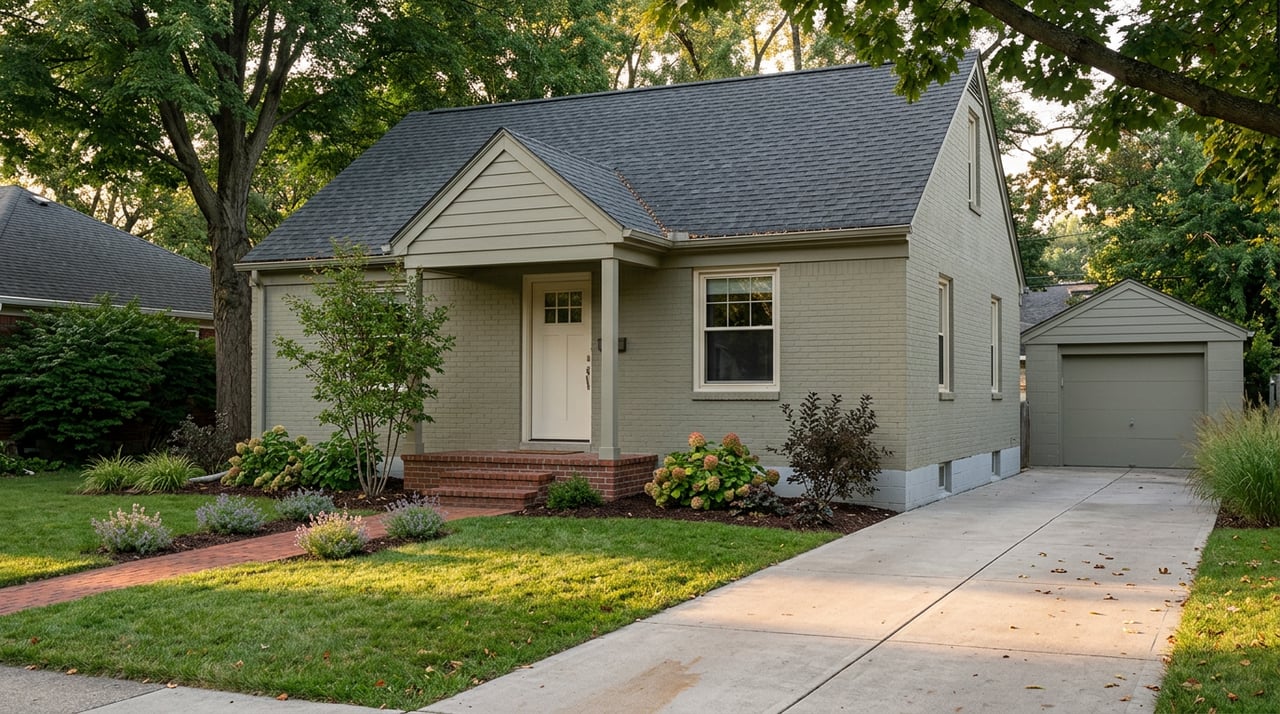
- College Heights runs toward larger brick and stone colonials on bigger lots, a step up in size from the cottages found elsewhere in the city.
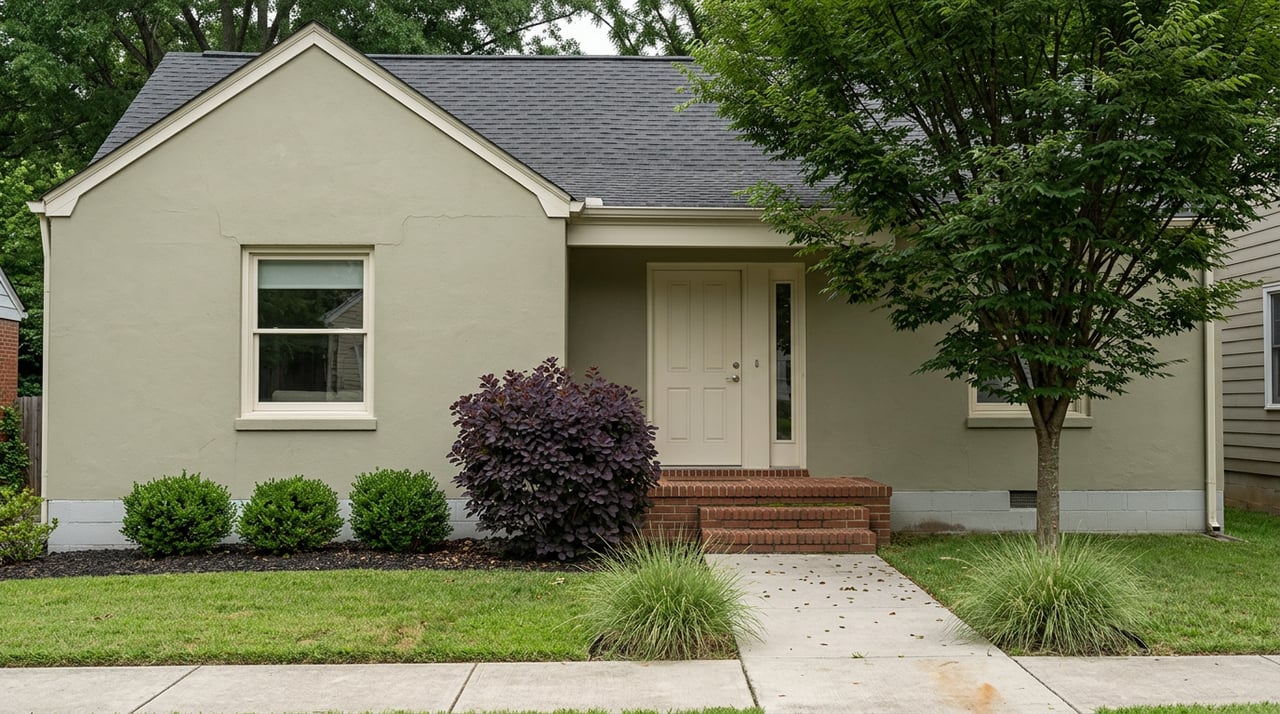
- Heritage Park, Ainsworth Park, and Worden Gardens offer smaller ranch and cottage stock built mostly before 1970, generally at a lower price point than the historic districts closer to downtown.
None of these compare cleanly to a single citywide median, because each one has a different ratio of owner-occupants to investors, and that ratio is exactly the variable driving the contradictions above.
What the same money buys in Ann Arbor instead
The other comparison worth running with real numbers is Ypsilanti against Ann Arbor, since most buyers looking at one are cross-shopping the other. Using a January 2026 price-per-square-foot snapshot, Ann Arbor priced around $280 per square foot against roughly $161 per square foot in Ypsilanti.
| Target size | Ann Arbor (approx.) | Ypsilanti (approx.) |
|---|---|---|
| 1,800 sq ft | $504,000 | $289,800 |
That gap is real, but it isn't evenly distributed inside Ypsilanti itself. A buyer targeting Normal Park or College Heights is competing in a mostly owner-occupied market where that per-square-foot figure holds up reasonably well. A buyer looking at a similar square footage two blocks closer to campus is shopping in a market where the comparable sale down the street might have been an investor buying a rental, not a family buying a home, which can make that per-square-foot number misleading in either direction.
The tax bill carries the same trap
Michigan calculates property taxes off a home's State Equalized Value, roughly half of market value, multiplied by the local millage rate, and homestead properties, meaning a primary residence, are taxed at a lower rate than non-homestead properties like rentals. In a city where more than half the housing stock is renter-occupied, it's common for a home you're touring to sit next to, or share a duplex lot with, a non-homestead property carrying a different tax rate entirely.
Michigan also resets a property's taxable value at the point of sale, so the tax bill the current owner pays is not the tax bill you'll pay once the deed transfers to you. Before you use a neighboring property's tax bill as a stand-in for your own, it's worth asking what the taxable value becomes at your purchase price, not the seller's.
What this means if you're actively comparing neighborhoods
If a listing site's median has convinced you that Ypsilanti is either a steal or overheated compared to last year, treat that number as a starting point rather than a verdict. The more useful question is which pocket you're actually shopping in, how much of the recent sales activity there was owner-occupants versus investors, and what a comparable home in that specific pocket, not the city average, has closed for recently.
That's the kind of read that comes from watching a market month over month rather than pulling a single snapshot. If you're weighing Ypsilanti against Ann Arbor, Ypsilanti Township, or another Washtenaw County community, the team at Charles by Reinhart can walk through the actual comparable sales in the specific pocket you're considering and help you read past the headline number. Schedule a consultation and bring the listings that confused you. That's usually where the more useful conversation starts.
FAQ
Why do neighborhood-level price stats swing more than citywide numbers? Smaller geographies mean fewer sales in any given period, so a single cluster of investor purchases or a single run of renovated single-family closings can move the reported median by a wide margin. The citywide number is noisy for the same reason, just with a larger sample size cushioning the swings.
Is Ypsilanti City the same market as Ypsilanti Township? No. They're separate jurisdictions with separate tax bases and different housing stock. The township, which wraps around the city and includes Ford Lake frontage, has generally traded at lower list prices than the city's historic districts, and the two shouldn't be treated as interchangeable when comparing listings.
Does a lower median mean it's a better time to buy in Ypsilanti? Not on its own. A dip in the citywide median can reflect a heavier share of investor transactions closing that month rather than owner-occupant homes getting cheaper. The more reliable signal is what specific, comparable homes in your target pocket have sold for recently, not the aggregate median for the whole city.