If you love the idea of being close to the water but do not want to give up everyday convenience, Brighton offers a compelling middle ground. You can find a small-town downtown feel near Millpond, neighborhoods tied to named inland lakes, and easy access to major recreation areas with swimming, paddling, and trails. If you are trying to decide what “living near the water” really looks like in Brighton, this guide will help you sort through the options and the practical details that matter most. Let’s dive in.
Why Brighton Stands Out for Water Living
Brighton’s water lifestyle is not just one thing. In the city core, Millpond Park gives downtown a water-facing focal point with a perimeter walking trail, boardwalk, and gazebo. Outside that setting, Brighton Township includes many lake-related neighborhoods and place names that reflect how closely housing and water are woven together here.
That range is part of what makes the area appealing. You might prefer a more walkable setting near downtown, a subdivision close to an inland lake, or a home that leans more on public recreation access than private frontage. In Brighton, all three paths are part of the conversation.
The area also feels manageable in scale. The Census estimates Brighton city at 7,933 residents in 2024, while Livingston County is much larger at 196,976 residents. That smaller city footprint helps explain why water living here can feel personal and varied rather than dominated by one single shoreline district.
Millpond Living Near Downtown Brighton
If you want water views with a more connected, in-town lifestyle, Millpond is the natural place to start. The city describes Millpond Park as a major gathering area, and its boardwalk, trail, and gazebo help create an everyday backdrop for walks, events, and time outdoors. It offers a different experience than a traditional lakefront neighborhood, but for many buyers, that is exactly the point.
This part of Brighton can appeal to people who want a lower-maintenance version of water-oriented living. Instead of centering your home search on docks and frontage, you may be focusing on proximity to downtown destinations and a water feature that adds scenery and a sense of place. That can be especially attractive if you want a blend of activity, convenience, and charm.
The city’s planning documents even discuss future residential dwellings overlooking the Millpond. That says a lot about how important this water feature is to Brighton’s identity. It is not just a park amenity, but part of the city’s long-term vision.
Lake-Oriented Neighborhoods in Brighton Township
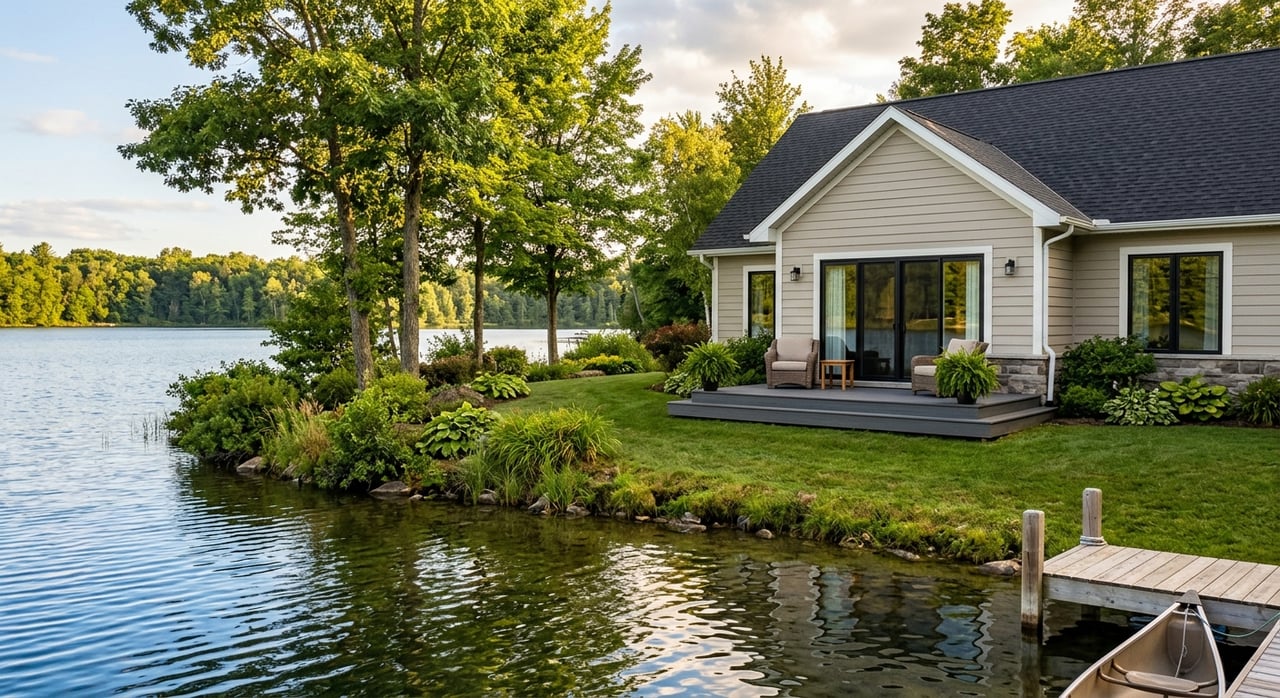
If your picture of water living includes subdivision streets, inland lakes, and neighborhood names that reflect the landscape, Brighton Township offers more to explore. The township drain map labels a number of water-related communities and landmarks, including Oaks at Beach Lake, Ravines of Woodland Lake, Woodland Lake West, Woodland Northshore, and Trapper’s Cove.
You will also see water features and place names such as Beach Lake, Brighton Lake, Woodland Lake, Lake of the Pines, Morgan Lake, Mill Pond, Lake Moraine, and Sloan Lake. These names are helpful reference points when you start narrowing your search. They show how many different pockets of the Brighton area connect to lakes, ponds, and waterfront settings.
For buyers, the key takeaway is not memorizing every lake name. It is understanding that Brighton offers a spectrum of water-adjacent neighborhoods, from pond-side settings near downtown to subdivisions built around or near inland lakes. That gives you more flexibility to match your lifestyle, budget, and commute needs.
Public Recreation Shapes the Brighton Lifestyle
One of the biggest advantages of living near the water in Brighton is that the lifestyle is not limited to private waterfront ownership. The area is also anchored by major public recreation spaces that make water access part of daily life for many residents. That broadens your options in a meaningful way.
Brighton Recreation Area
Brighton Recreation Area covers 4,947 acres west of US-23 and south of I-96. It includes nine lakes, a designated swim beach, boating access, paddling, fishing, picnic areas, and a 35-mile trail system. If you enjoy being outdoors in different ways across the year, this park is a major local asset.
The Michigan DNR also describes the interior lakes here as undeveloped or sparsely developed. That matters because it creates a quieter, more natural feel than you may find in some residential lake neighborhoods. For buyers who want water nearby but also value a less built-up setting, that can be a strong point in Brighton’s favor.
Island Lake Recreation Area
Island Lake Recreation Area adds even more variety. This 4,000-acre park includes four inland lakes and the Huron River, along with opportunities for swimming, paddling, hiking, and trail connections to Kensington Metropark and the Huron Valley Trail. It expands what “living near the water” can mean on a practical level.
For some buyers, that means choosing a home with convenient access to outdoor amenities instead of prioritizing direct frontage. That decision can open up more neighborhoods while still delivering the lifestyle you want. It can also be a smart fit if your weekends revolve around movement, recreation, and easy day-to-day access to nature.
Access Matters Too
There is one practical point to keep in mind. The DNR says a Recreation Passport is required for vehicle entry into state park and forest campgrounds. So if your version of water living depends heavily on these recreation areas, access is part of the planning process, not just the map.
What Daily Life Can Look Like
Living near the water in Brighton often means choosing between different rhythms of daily life. Downtown-adjacent living near Millpond may offer a more walkable routine with local events and a central gathering place. Lake-oriented subdivisions may feel more residential and tucked into the landscape.
Homes near major recreation areas can offer yet another pattern. You may not have direct water frontage, but you could gain quick access to beaches, paddling launches, fishing spots, and trail systems. For many households, that is a very practical way to enjoy the water without centering every decision on lakefront ownership.
This is why Brighton works well for a wide range of buyers. You can prioritize scenery, recreation, convenience, or a mix of all three. The area supports a true water-and-commute lifestyle spectrum.
Budget and Commute Considerations
As you compare neighborhoods and home types, it helps to keep the broader market in mind. In Livingston County, the Census estimates the median owner-occupied home value at $356,800 and median household income at $103,039. In Brighton city, those figures are $339,000 and $80,682.
Those numbers do not tell you what any one home will cost, but they do give useful context. If you are searching for a home near the water, you may be weighing location, frontage, neighborhood style, and recreation access against your overall budget. A home near a named lake, for example, may offer a different value equation than a home closer to downtown or a park.
Commute is another part of the equation. Mean travel time to work is 30.6 minutes countywide and 24.8 minutes in Brighton city. That helps explain why many buyers are trying to balance water access with convenience to work, daily errands, and regional highways.
Due Diligence for Water-Adjacent Homes
Buying near the water comes with a few extra layers of homework. The good news is that the right due diligence can help you move forward with more confidence. In Brighton and Livingston County, a few items deserve special attention.
Check Lake Levels and Drainage Assessments
Livingston County says it inspects, operates, and maintains nine dams, and it notes that official lake levels are court ordered but can fluctuate with weather. That means lake conditions are shaped by both legal and environmental factors. If you are buying lakefront or lake-access property, it is wise to understand that context early.
The county also notes that drainage assessments can be levied to properties in a drainage district. Before you make an offer, ask whether the property is in a drainage district and whether any special assessments apply. This is a practical step that can affect your long-term ownership costs.
Review Flood Hazard Information
Flood-hazard review is a standard part of smart due diligence for water-adjacent property. EGLE points buyers to the FEMA Flood Map Service Center as the official public source for flood-hazard information. Even if a home feels comfortably set back from the shoreline, verifying the flood map status is still worth doing.
This step helps you understand risk and ask better questions during the buying process. It can also affect insurance planning and your comfort level with the property over time.
Look at Well Data and Shoreline Context
EGLE’s Water Well Viewer can show water wells and related environmental layers, which can be helpful depending on the property. Livingston County’s Lakes & Dams page also offers aerial photos for lakefront and lake-access homeowners. Those images can give you a useful first look at shoreline context before or after a tour.
Taken together, these tools can help you evaluate the setting more clearly. You are not just looking at the house itself, but also the way the lot, water, and surrounding area function together.
How to Choose the Right Water Setting
The best Brighton water lifestyle for you depends on what you want your week to feel like. If you want an in-town setting with a public water feature and a central community hub, focus on the area around Millpond. If you picture a residential neighborhood tied to a named inland lake, Brighton Township may offer more of what you have in mind.
If you care most about outdoor access, a home near Brighton Recreation Area or Island Lake Recreation Area may be the better fit. That route can give you frequent access to swimming, paddling, trails, and open space without requiring direct frontage. It is often a more flexible way to enjoy the area’s natural assets.
This is where local guidance matters. A neighborhood-first search can help you compare the feel of each setting, not just the home specs on paper. When you look at Brighton through that lens, the area’s water story becomes much easier to navigate.
If you are exploring Brighton or nearby communities and want help finding the right lifestyle fit, Charles by Reinhart offers personalized, high-touch guidance to help you evaluate neighborhoods, commute tradeoffs, and the practical details that come with water-adjacent living.
FAQs
What does living near the water in Brighton usually mean?
- In Brighton, it can mean living near Millpond downtown, in a lake-oriented subdivision in Brighton Township, or close to public recreation areas with lakes, swimming, paddling, and trails.
What lakes and neighborhoods should buyers know in Brighton?
- Useful reference points include Beach Lake, Brighton Lake, Woodland Lake, Lake of the Pines, Morgan Lake, Lake Moraine, Sloan Lake, and neighborhoods such as Oaks at Beach Lake, Ravines of Woodland Lake, Woodland Lake West, Woodland Northshore, and Trapper’s Cove.
What public recreation areas support the Brighton water lifestyle?
- Brighton Recreation Area offers nine lakes, a swim beach, boating access, fishing, paddling, picnic areas, and a 35-mile trail system, while Island Lake Recreation Area includes four inland lakes, the Huron River, and trail connections.
What should buyers check before purchasing a water-adjacent home in Brighton?
- Buyers should review flood-hazard information, look into well data where relevant, and ask whether the property is in a drainage district or subject to any drainage assessments.
How do lake levels work for Livingston County properties?
- Livingston County says official lake levels are court ordered, but they can still fluctuate with weather, so buyers should understand both the legal and seasonal context of a property near the water.
Is Brighton a good fit if you want water access without direct lakefront ownership?
- Yes. Brighton’s mix of downtown Millpond living, lake-adjacent neighborhoods, and major nearby recreation areas makes it possible to enjoy a water-focused lifestyle without owning direct frontage.